
Everyone's Watching the AI Boom. Almost Nobody Sees the Real Opportunity Behind It.
%201.webp)
Illustrative 15 MW SkyMod deployment · Source: BluSky AI
You already know the story of AI. Everyone does.
ChatGPT arrives. Everyone realizes AI needs more compute power.
The month ChatGPT launched, Nvidia was worth about $364 billion1. Today it is worth $5.4 trillion, 15x larger in under four years2.
Every retail investor drew the same lesson: buy the chips. Now, nearly half of the S&P 500’s market value sits in AI-linked stocks3.
But chips aren’t the real story in AI right now. We have all the chips we need.
The real story is a shortage that few in the AI space are prepared for. But it’s an unprecedented opportunity for those who can solve it.
It starts with one rather uncomfortable number.
The Number that Nobody In Tech Wants to Say Out Loud
0.24%.
Not 24%. A quarter of one percent.
Northern Virginia has the country’s largest data center market4. Yet right now, it has only 0.24% capacity available.
AI chipmakers are running out of places to install their chips.
Every chip needs a place to go. It does nothing until it’s installed somewhere with power, cooling, and a network connection. That somewhere is a data center. And there simply aren’t enough.
That’s why they’re building more data centers. But here’s the thing… they’re doing it wrong.
Because today’s data center building process takes so long, 80.4% of the capacity currently under construction has already been leased. They’re building more, and they’re still running out of room.
Why is this happening? According to PJM, traditional data centers can take up to seven years to build, and the lead time to get equipment is years long on its own5.
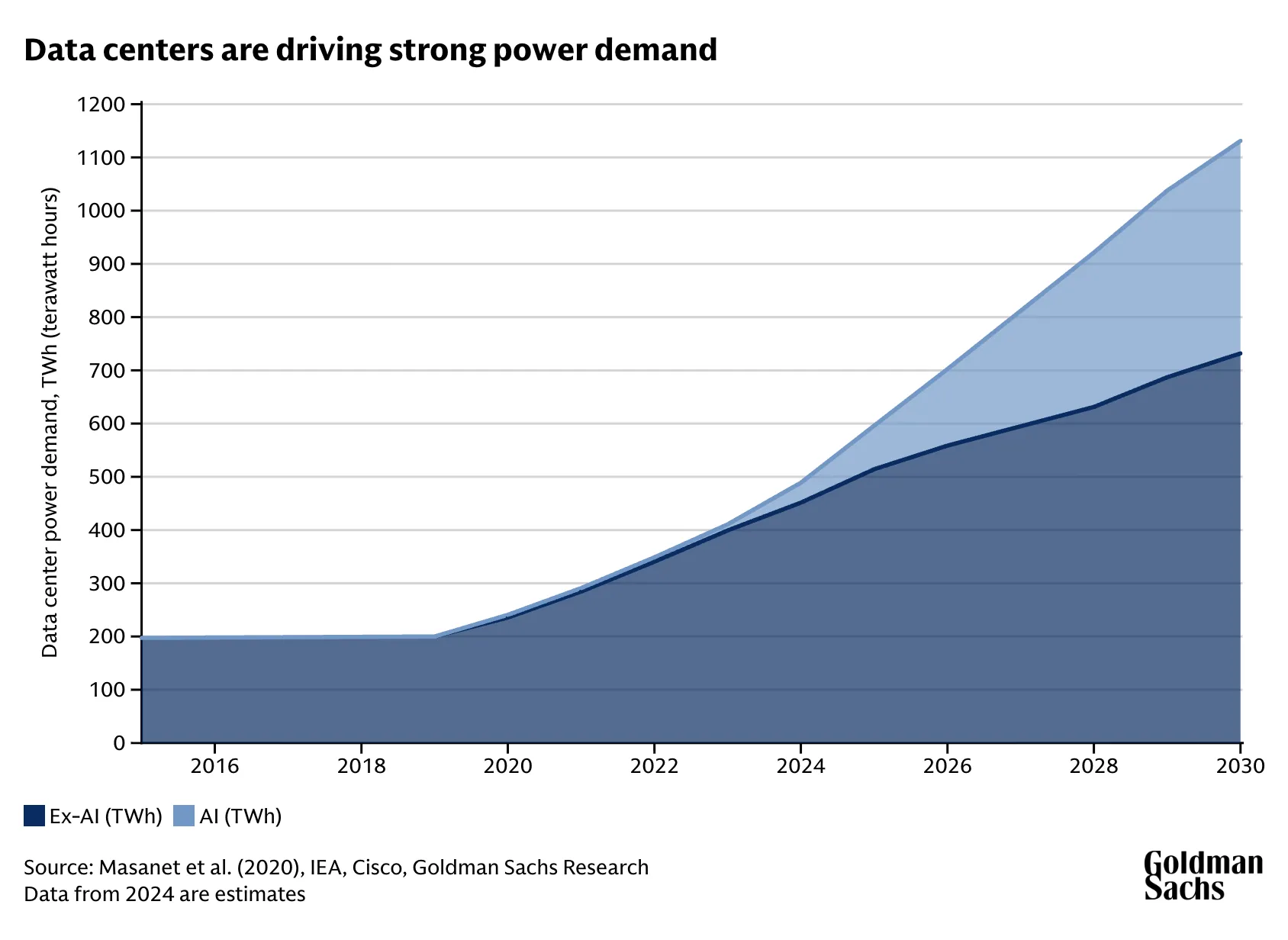
Meanwhile, Goldman Sachs projects AI will require 3x the data center capacity that exists today, and drive a 160% increase in power demand.
The Company Behind 3X Faster Data Center Builds
Their facilities are called SkyMod™ AI Factories.
Inside them: NVIDIA GPU technology, the same class of processor the entire AI industry is competing for.
That one design decision, factory-built instead of field-built, is a timely breakthrough for a number of reasons:
They don’t have to wait for electricians.
Microsoft’s president named the electrician shortage the number one problem slowing U.S. data center expansion. Electrical work accounts for 45% to 70% of data center construction costs, and a single site can require up to 1,500 workers at peak. Prefabrication moves most of that labor from 20 separate job sites to one factory6.
They don’t have to generate power from scratch.
GE Vernova’s gas turbine backlog hit 44 GW in Q1 2026. Lead times run about three years, and slots are effectively booked through 2029. BluSky AI’s approach is to place SkyMod units where power already exists rather than build generation from scratch7.
They demand less power and little to no water.
SkyMod units are compact, use little to no water, and are designed for powered land rather than sprawling new campuses.
BluSky AI is not the only company that noticed this need.
See the Investment Opportunity →The difference: for those companies, modular is a tactic. For BluSky AI, it is the whole company.
The modular data center market is projected to reach $70 billion by 2030, up from $29 billion in 20248.
Data Centers that Use Less Power, Less Land, and 99.5% Less Water
BluSky AI’s SkyMod units are meant to be built with a fraction of the footprint of a traditional data center.
SkyMod sites run 4 to 50 MW. Traditional hyperscale sites run 500 MW and up. That is the difference between a building and a campus. Less land consumed, less draw on the local grid, and far less to stand up and object to at a zoning hearing.
Bigger campuses also use a lot of the town’s water. Not BluSky AI.
Their system uses closed-loop liquid cooling. The same water runs through pipes, cools the machines, gets cooled back down, and goes around again. You fill it once, like the radiator in your car, and top it off now and then. This type of mechanism has been reported to use about 22,000 gallons a day, where the old spray-and-evaporate method would have used about 5 million9.
Less power drawn, less land taken, less water gone. That is what a data center looks like when it is built to be approved instead of argued over.
BluSky AI is building them now, and you can invest.
Investment Opportunity →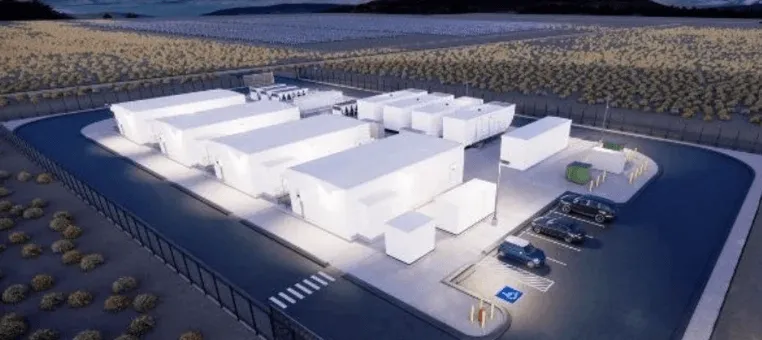
What BluSky AI Plans to Sell: Compute, by the Hour
BluSky AI is building toward what the industry calls a neocloud, a cloud provider built specifically for AI and machine learning rather than adapted from general-purpose hosting.
BluSky AI SkyMod
vs
Traditional Data Center
GPU-as-a-Service.
High-performance GPU capacity rented through usage-based pricing.
AI-optimized design.
Every SkyMod is engineered for power efficiency, cooling, and network speed.
Transparent pricing.
Per-GPU rates that include compute, networking, and storage.
Scalable deployment.
Modular units are designed to expand in increments as demand rises.
Enterprise partnerships.
Collaborations with organizations that need dedicated AI-ready infrastructure.
Note which direction the revenue line points. GPU rental rates rose from roughly $1.85 per hour in late 2025 to about $2.40 by March 2026, a nearly 30% increase. Data center rents rose across every size tier in the first half of 2026. In most technology markets, scale drives prices down. In AI computing, scarcity is pushing them up10.
.webp)
Shipped as 50’ modules by semi, direct to site
.webp)
Illustrative 4.5 MW SkyMod facility
Source: BluSky AI, via FRC equity research.
20+ Locations Planned. 200+ MW Targeted.
The current portfolio spans Utah, Colorado, Kansas, Oklahoma, Missouri, Texas, and Tennessee. It includes a 50 MW site in central Utah, a 50 MW site in north central Missouri, and a 45 MW site in northeast Tennessee.
.webp)
20+
modular locations planned across the U.S.
200+ MW
of planned compute capacity
10+
SkyMod sites announced to date
Months, not years
targeted deployment per unit
All site and capacity figures reflect current plans and negotiated positions, not operating facilities.
Why Investors Are Backing BluSky AI Now
$5.50
Fixed offering price per share
Up to 20%
Bonus shares based on investment amount
BSAI
Already trading on the OTCQB Venture Market
200+ MW
Planned compute capacity across 20+ planned U.S. locations
100X
AI compute demand vs traditional cloud
$7.1T11
Projected AI investment by 2030
Become a BluSky AI shareholder at $5.50 per share, with bonus shares of up to 20%.
SOURCES
1 .https://companiesmarketcap.com/nvidia/marketcap/
2. https://stockanalysis.com/stocks/nvda/market-cap/
3. https://seekingalpha.com/news/4577994-ai-stocks-near-45-of-sp-500-weight-goldman-sachs-says
6. https://fortune.com/2026/03/02/ai-data-centers-electrician-shortage-gen-z-training-careers/
10. https://www.apollo.com/wealth/insights-news/insights/2026/06/growing-compute-shortage